The forts
Forts you see from Cartagena Bay
A guide to the forts around Cartagena Bay: which ones the pirate cruise names, what each guarded and where the bay's two entrances are.
Book the pirate ship ↗Quick answer
The ticket names two forts on the route, San Sebastián del Pastelillo and Santa Cruz, together with the Virgen del Carmen. UNESCO lists both among the forts around the interior of the bay. The bay has two entrances, Bocachica and Bocagrande, and the larger forts at Bocachica and the castle of San Felipe de Barajas sit outside the cruise.
A bay with two doors
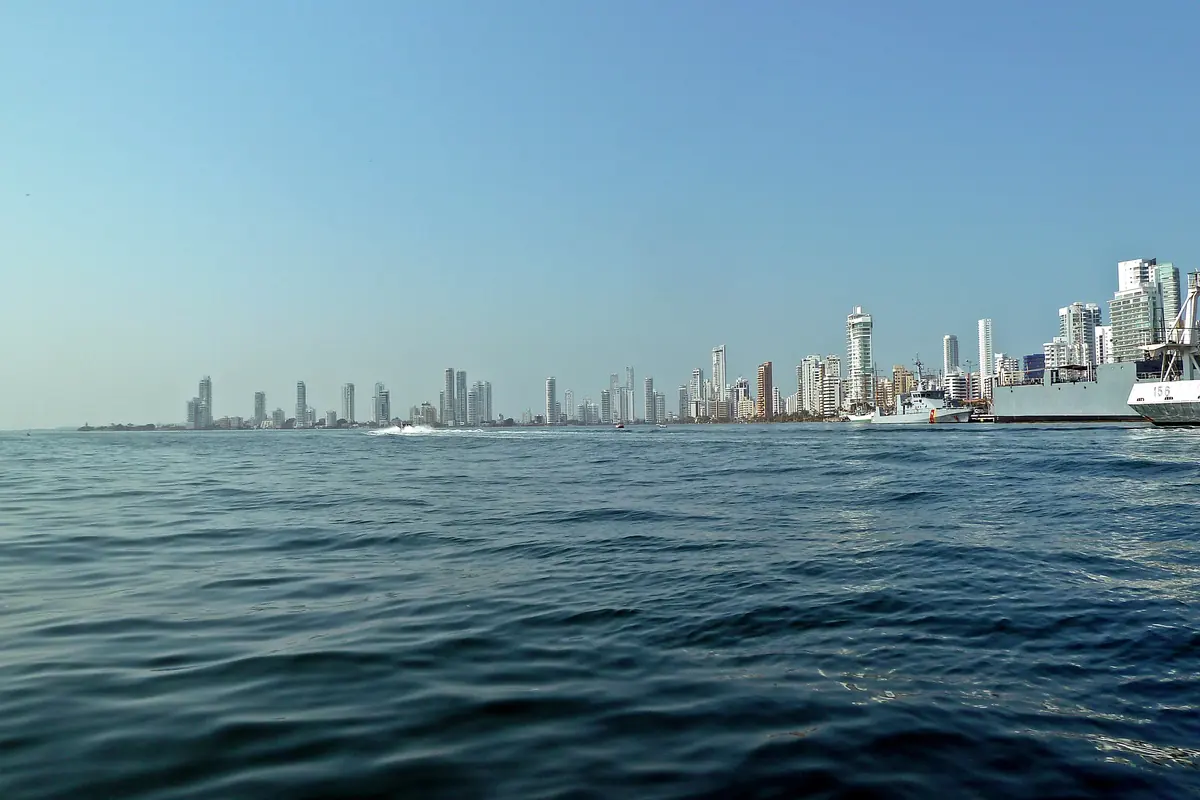
UNESCO's initial system of fortifications included the urban enclosure wall, the bastioned harbour of San Matías at the entry to the Bocagrande pass and the tower of San Felipe del Boquerón. Cartagena Bay has two entrances: Bocachica, the Small Mouth, and Bocagrande, the Big Mouth. Bocagrande is the peninsula known for its skyscrapers, while Bocachica was the deep-water entrance. In 1640 three Portuguese ships ran aground in the Bocagrande channel, which sped up the formation of a sand bar, and the defence of the bay then shifted to the Bocachica side. That is why the main forts stand at Bocachica, away from the inner bay where your cruise stays.
San Sebastián del Pastelillo
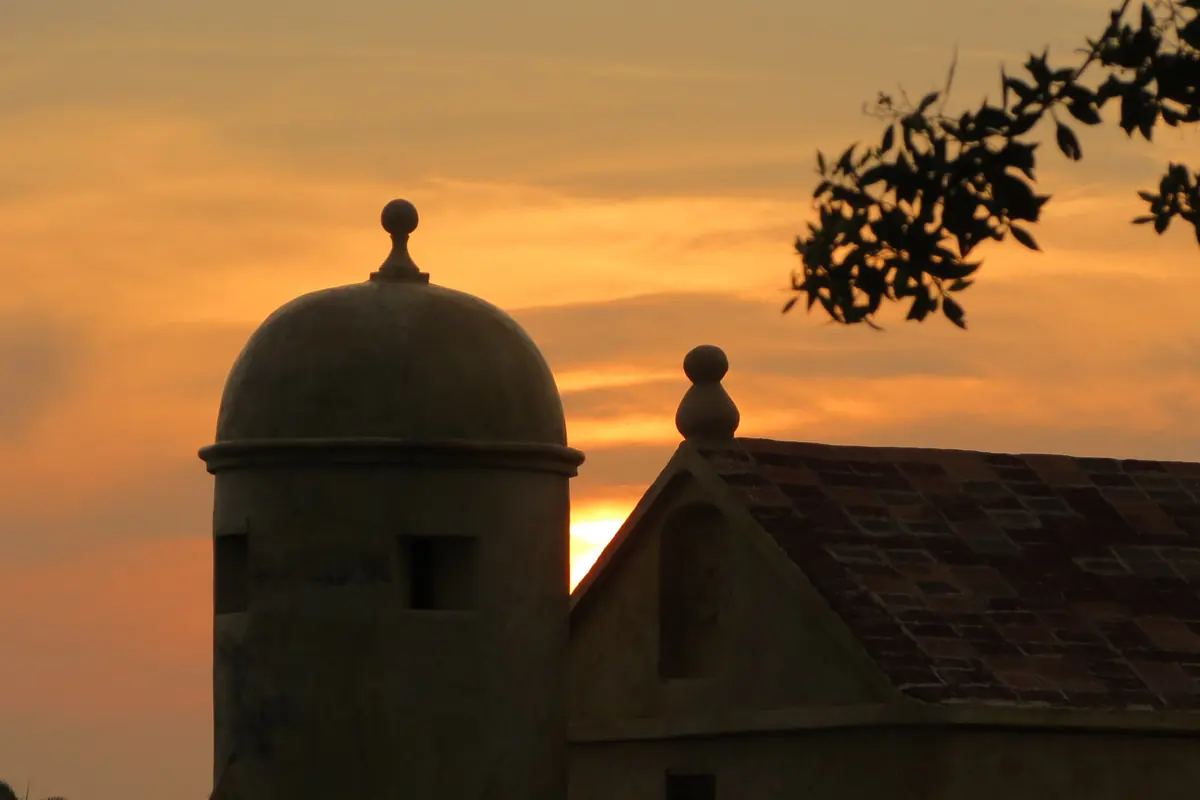
The ticket names San Sebastián del Pastelillo as a landmark on the route. UNESCO lists it among the forts around the interior of the bay, together with Santa Cruz and San Juan de Manzanillo. UNESCO says that all of the harbour's natural passes were eventually dominated by fortresses, and this is one of them. From the deck it reads as part of the skyline.
Santa Cruz and Manzanillo
The second fort the ticket names is Santa Cruz, also called Castillo Grande. Its neighbour among these inner forts is San Juan de Manzanillo. UNESCO lists three forts around the interior of the bay, Santa Cruz, San Juan de Manzanillo and San Sebastián de Pastelillo, and the ticket names two of them.
Bocachica: the outer gate
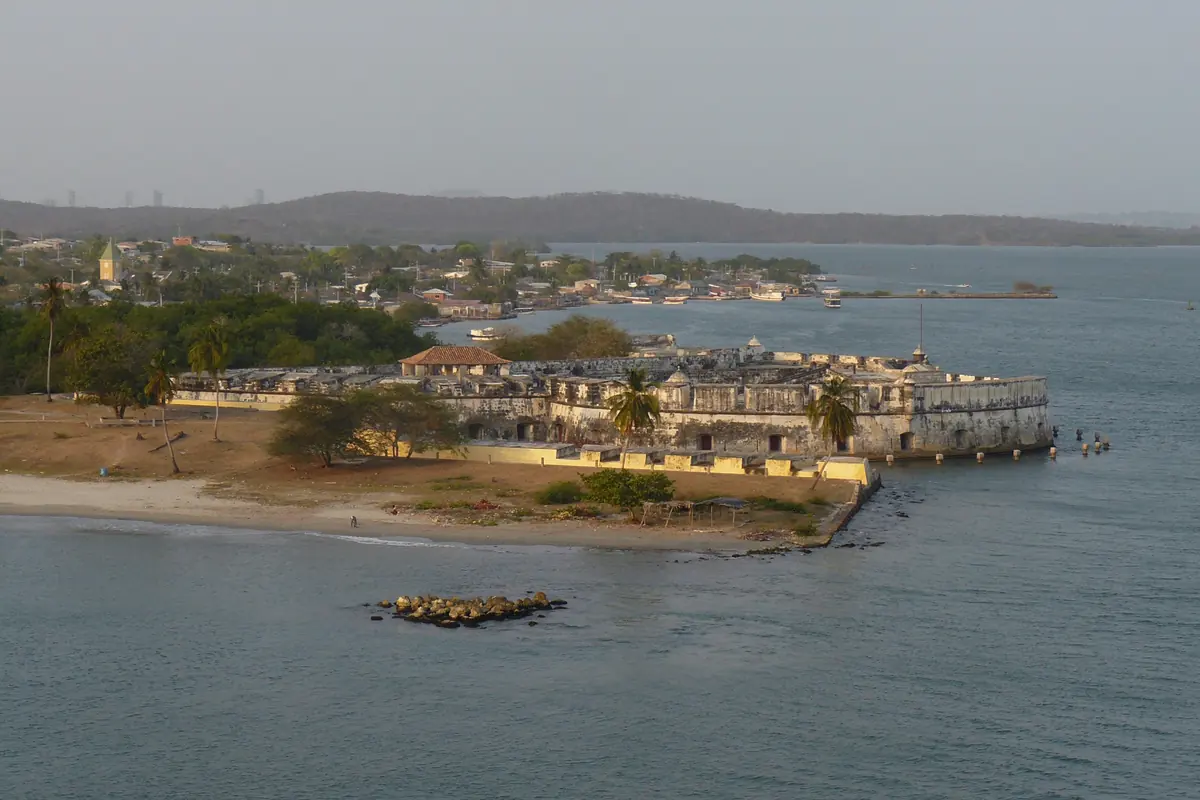
UNESCO lists San Luis, San José, San Fernando, San Rafael and Santa Bárbara at Bocachica, the south-western pass. They guarded the deep-water entrance, which was so narrow that it allowed the passage of only one ship at a time. In 1741 a British armada attacked the city by way of this entrance. The pirate cruise stays in the inner bay and does not go through this entrance, so they are not part of the pirate cruise.
San Felipe de Barajas
The Castillo San Felipe de Barajas stands on the rocky hill of San Lázaro, which UNESCO describes as the crag that dominates the city to the east. It was named in honour of Philip IV of Spain. It fell to Pointis in 1697 and held in 1741. The castle lies inland, east of the old city, and it is visited by land. It is open to visitors, though only some of its tunnels can be viewed.
Reading the forts as a system
UNESCO describes the whole as the most extensive and one of the most complete systems of military fortifications in South America. It is a system because each fort covers a channel or a hill that another fort cannot reach. Seen from a boat, the forts look scattered, yet each one has a job: closing a passage, watching the inner bay or protecting the city from the land side. The cruise gives you the water-level view of that arrangement, which is the one the raiders had.
Read next: Cartagena's pirates and its walls
Who this isn't for
A pirate cruise is not a fort tour. The ship names its landmarks, and the show and the drinks take most of the time, so a visitor who wants to walk the ramparts, study the tunnels or learn engineering details should visit San Felipe de Barajas and the walls by day. The cruise is the right choice for seeing the skyline and the forts as a backdrop. A visit by day to the castle or to the walls fills the gap: only some of the castle's tunnels can be viewed, and the walls enclose the old city.
Read next: Cartagena pirate ship: which to book
Frequently asked questions
Which forts does the pirate cruise name?
The ticket names San Sebastián del Pastelillo and Santa Cruz, together with the Virgen del Carmen.
Does the ship stop at a fort?
No. The forts are seen from the water as part of the skyline.
Where are the bay's entrances?
The two entrances are Bocachica and Bocagrande.
Sources